The Ultimate Guide to Marketing Automation: Scaling Your Business in 2026
In the high-velocity commercial environment of 2026, the traditional methods of manual lead management have become a primary obstacle to growth. For the modern entrepreneur, the "Scaling Sam" who is juggling team management with revenue targets, the administrative burden of manual follow-ups is a silent profit killer. This is why a comprehensive marketing automation strategy is no longer a luxury; it is the fundamental operating system of any successful enterprise.
True growth marketing automation is the synergy of sophisticated software and strategic data. It allows you to nurture leads, personalize customer experiences at scale, and reclaim your time for high-level visionary work. By integrating the right marketing automation tools, you transform your business from a reactive entity into a proactive, revenue-generating machine.
What is Marketing Automation and Why Does It Matter?
At its core, marketing automation is the use of technology to manage repetitive marketing tasks across multiple channels. However, marketing automation for beginners often starts with a simple formula: Trigger + Data = Personalized Communication.
When an action occurs (a trigger), such as a lead downloading a whitepaper, the system uses existing customer insights (data) to deliver a perfectly timed, relevant message. Research indicates that organizations that effectively implement marketing automation see an average increase in sales productivity of 14.5% and a massive surge in qualified leads.
The Benefits of a Unified Marketing Automation Platform
Sales and Marketing Alignment: Automation bridges the gap between your departments, ensuring that the sales team only receives leads that have been pre-qualified through scoring.
Scalable Personalization: You can deliver hyper-targeted content to thousands of individuals simultaneously based on their real-time website behavior.
Smarter Resource Allocation: With marketing budgets remaining tight, a marketing automation platform ensures that every dollar is tracked and every interaction is optimized for ROI.
Core Marketing Automation Features to Look For
When evaluating a marketing automation tools list, it is essential to look beyond basic email scheduling. In 2026, the most effective platforms include a suite of advanced capabilities designed for maximum efficiency.
1. Workflow AI Assistant
A Workflow AI Assistant acts as the digital nervous system of your company. It maps out multi-step customer journeys, identifying "friction points" where leads drop off and automatically deploying "re-engagement" triggers to pull them back into the funnel.
2. Best-in-Class Voice AI
Communication is the heartbeat of professional services. Voice AI agents now handle inbound inquiries, answer complex FAQs, and book appointments with natural, human-like cadence. This ensures your business is always "open," even when your human team is offline.
3. Dynamic Segmentation and Live Profiles
Static lists are a relic of the past. Modern marketing automation tools maintain live customer profiles that update in real-time. If a prospect moves from "browsing" to "high-intent" behavior, the system automatically shifts them into a priority segment for immediate follow-up.
The 9-Step Roadmap to Implement Marketing Automation
Successfully adopting an automation strategy requires more than just buying software. You need a structured marketing automation project plan. Follow this roadmap to ensure a seamless transition:
Identify the Opportunity: Audit your current funnel to find manual tasks and "leaks" where prospects are disappearing.
Define Your Goals: Set specific KPIs, such as "Increase lead conversion by 20% in the first 90 days."
Understand Your Audience: Determine where your customers live online (SMS, Email, Social) and what data you need to collect from them.
Select Your Channels: Choose the platforms that align with your audience's preferences.
Audit Your Data: Ensure your customer information is clean and accessible to your new marketing automation platform.
Design the Framework: Create a visual map of your triggers and messaging flows.
Build Your Collateral: Draft your emails, SMS templates, and AI scripts.
Rigorous Testing: Run test subjects through every workflow to ensure the logic holds up under pressure.
Launch and Optimize: Monitor the results and use machine learning insights to refine your approach.
Exploring the Different Types of Marketing Automation
To build a robust marketing automation strategy, you must understand the various tools available in the 2026 market.
Sales and Marketing Automation
This focuses on the "Hand-off." When a lead reaches a certain "Lead Score," the system automatically notifies a sales representative or triggers a Voice AI call to schedule a consultation. This ensures that no high-value lead ever goes cold.
Social Media Automation
Tools like Hootsuite or Sprout Social allow for "social listening" and automated scheduling. This maintains your brand's presence across all platforms without requiring your team to be logged in 24/7.
Programmatic Advertising
Modern automated advertising platforms use AI to bid on ad placements in real-time, ensuring your budget is spent on the audiences most likely to convert based on historical data patterns.
Expert Marketing Automation Tips for Scaling Sam
If you are a business owner feeling overwhelmed by "software bloat," these tips will help you streamline your operations:
Consolidate Your Stack: Avoid paying for ten different subscriptions that do not communicate with each other. Choose an all-in-one platform like Business Force One to manage your CRM, funnels, and AI employees in one place.
Focus on Lead Nurturing: It is far cheaper to nurture an existing lead than to acquire a new one. Use automated sequences to provide ongoing value to your database.
Bridge the Skills Gap: Automation technology moves fast. Ensure your team is trained on how to use a Workflow AI Assistant to its full potential.
Prioritize First-Party Data: With the decline of third-party cookies, the data you collect directly from your customers is your most valuable asset.
Why Business Force One is the Ultimate Solution
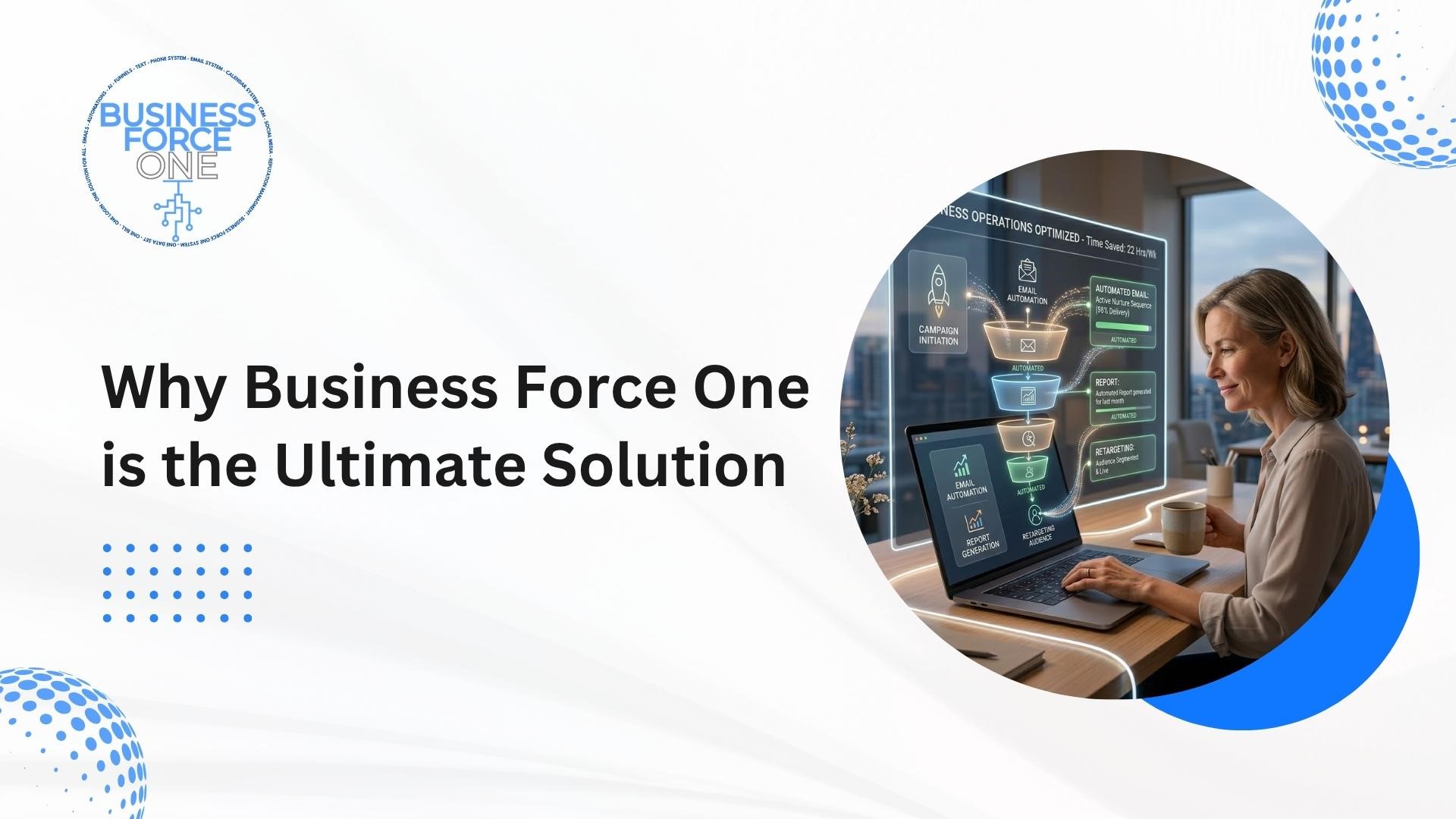
At Business Force One, we recognize that entrepreneurs do not just need more "tools", they need more time. Our platform is designed to replace fragmented software with a unified, intelligent operating system.
By combining sales and marketing automation with elite Voice AI and ConnectAIve Intelligence™, we help you erase the "busy work" that hinders your progress. Our clients report a 30% reduction in operational costs because their system handles the qualifying, the follow-up, and the scheduling automatically.
The Future belongs to the Automated
The era of manual, error-prone business management is reaching its conclusion. The market leaders of 2026 are those who have successfully deployed marketing automation tools to handle the volume of their operations, allowing their human talent to focus on relationship-building and creative problem-solving.
By following a structured marketing automation strategy and utilizing a powerful Workflow AI Assistant, you ensure that your business remains agile, responsive, and highly profitable. The path to eight figures is paved with systems, not just hard work.
Do you want to see how automation can transform your revenue?
Schedule Your Business Automation Audit with Business Force One
Frequently Asked Questions
What is marketing automation by Business Force One?
At Business Force One, marketing automation is an intelligent "Business Operating System." We combine marketing automation tools with ConnectAIve Intelligence™ to handle lead nurturing and scheduling. Our platform replaces fragmented software with a unified Workflow AI Assistant, allowing you to erase manual tasks and focus on high-level strategic growth.
How to implement marketing automation?
To implement marketing automation, first audit your funnel for "leaks." Define specific KPIs, select a unified marketing automation platform, and clean your data. Map your customer journey triggers, build your AI-driven collateral, and perform rigorous testing. Finally, launch and use real-time analytics to optimize your automated growth strategy.
What is marketing automation, and why should I use it?
Marketing automation uses technology to manage repetitive tasks across multiple channels. You should use it to scale personalization, improve sales-marketing alignment, and increase productivity. By utilizing a marketing automation strategy, you ensure 24/7 lead engagement through Voice AI, reducing operational costs while significantly boosting your overall conversion rates.
How to set up marketing automation by Business Force One?
Setting up with Business Force One is seamless. We integrate your CRM, funnels, and Voice AI into one dashboard. Our team helps you map custom workflows, ensuring your sales and marketing automation triggers are perfectly aligned. This elite setup allows you to scale leaner, faster, and more profitably.
