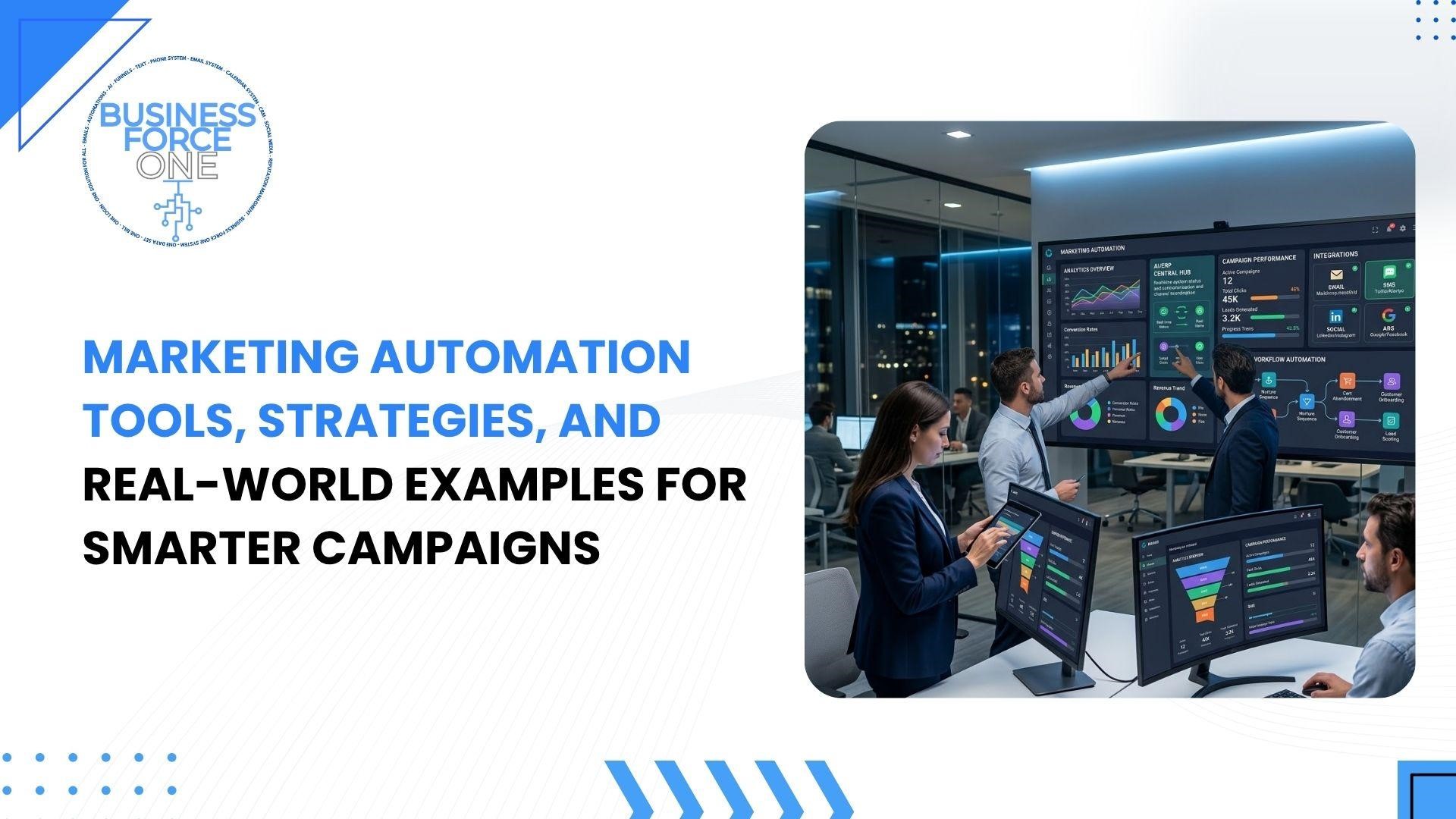
Marketing Automation Tools, Strategies, and Real-World Examples for Smarter Campaigns
In the high-stakes business environment of 2026, "staying busy" is the silent killer of growth. For modern entrepreneurs and scaling teams, the gap between a struggling business and a market leader is defined by one thing: efficient systems. If your team is still manually pulling email lists, chasing leads through spreadsheets, or struggling to coordinate messages across SMS and social media, you aren't just losing time; you’re bleeding revenue. This guide breaks down the essential marketing automation tools, strategies, and the exact features you need to turn your business into a high-performance machine.
What is Marketing Automation in 2026?
Marketing automation is no longer just "scheduling an email." In 2026, it is the use of integrated automation tools that improve conversion rates by orchestrating cross-channel customer journeys using real-time data.
Unlike traditional scheduling, which sends a static message to a fixed list, modern automation is responsive. It reacts to what your customer does right now. If a lead visits your pricing page but doesn't book a call, a Workflow AI Assistant can instantly trigger a personalized text message to address their concerns.
For "Scaling Sam", the overwhelmed business owner, this means the system handles the "grunt work" while the human team handles the strategy.
The Core Marketing Automation Features You Need
When looking at a marketing automation tools list, it is easy to get overwhelmed. To avoid "software bloat," focus on these high-impact marketing automation features:
1. Live Customer Profiles
Static databases are dead. You need a platform that maintains live profiles. This means your CRM should automatically update a contact’s status based on their purchase history, website behavior, and even their sentiment in recent chats.
2. Dynamic Segmentation
Stop sending the same email to everyone. Dynamic segmentation ensures that as soon as a lead meets a specific criterion, like "clicked a link in the last 24 hours" they move into a high-priority bucket. This is a core part of best practices for campaign automation.
3. Workflow AI Assistant
A Workflow AI Assistant acts as the digital "nervous system" of your business. It maps multi-step journeys, adjusts logic on the fly, and ensures that your marketing, sales, and support departments are always in sync.
4. Voice AI & Conversational Automation
In 2026, Voice AI has become a game-changer for marketing automation for professional services. Imagine an AI that can handle inbound calls, answer FAQs, and book appointments with a natural-sounding voice. This reduces the need for a 24/7 front-desk staff while ensuring no lead goes unanswered.
5 Marketing Automation Tools That Drive ROI
To help you build your marketing automation project plan, here are the tools currently dominating the market for scaling teams:
Business Force One (The All-in-One): Built for entrepreneurs who want to consolidate. It combines CRM, funnel building, and Voice AI into one dashboard.
HighLevel: The powerhouse for marketing automation for agencies. It allows agencies to manage hundreds of client sub-accounts with unified automation templates.
Braze: Excellent for high-volume B2C brands that need real-time data activation and cross-channel orchestration (Mobile, Web, Email).
Zapier: The "glue" that connects specialized tools, allowing for end-to-end automated advertising platforms integration.
Jasper AI: Specifically for automating the content creation side of your marketing funnels.
Real-World Examples of Smarter Campaigns
Let’s look at how these strategies move the needle in the real world.
Example 1: The "Speed to Lead" Strategy
A professional coaching firm was losing 40% of its leads because they weren't following up fast enough. By implementing Voice AI, they ensured that every web inquiry received a phone call within 30 seconds.
Result: 117% increase in appointment sets within the first month.
Example 2: Behavioral Onboarding
An eCommerce brand used automated advertising platforms to trigger specific ads based on cart abandonment. Instead of a generic "come back" ad, the AI analyzed why the user left (e.g., shipping costs) and offered a targeted "Free Shipping" coupon only to that segment.
Result: 135% increase in recovered revenue.
Example 3: Precision Recruitment for Agencies
Using marketing automation for agencies, a recruiting firm automated the initial screening of 5,000+ resumes. The AI flagged the top 1% of candidates based on cultural fit and skill, moving them directly to a human interview.
Result: Hiring time reduced from 45 days to 12 days.
How to Build Your Marketing Automation Project Plan
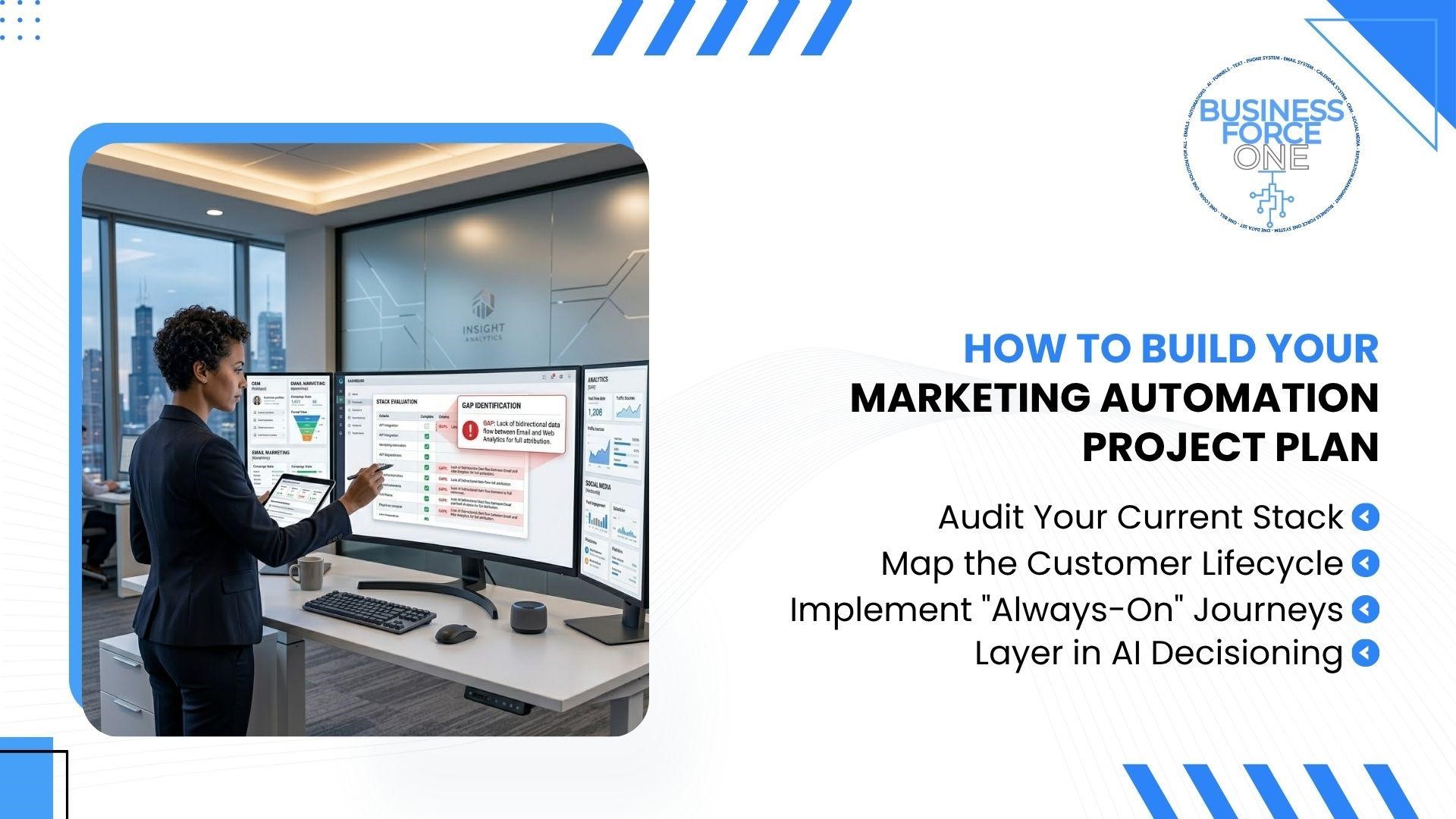
If you need help with marketing automation, don't try to build the whole system at once. Follow this step-by-step framework:
Step 1: Audit Your Current Stack
Identify where you are overpaying. Are you paying for an email tool, a separate SMS tool, and a different funnel builder? Consolidate these into an all-in-one automation platform.
Step 2: Map the Customer Lifecycle
Identify the "friction points" in your funnel.
Where do leads drop off?
Where is your team spending too much time on manual replies?
These are your first targets for automation.
Step 3: Implement "Always-On" Journeys
Start with a welcome sequence and a cart/form recovery sequence. These "always-on" journeys work 24/7, ensuring that your business generates revenue even while you sleep.
Step 4: Layer in AI Decisioning
Once your basic workflows are running, use a Workflow AI Assistant to test different paths. Let the AI decide if a customer should receive an email or a text based on their previous engagement patterns.
Why Marketing Automation is Vital for Professional Services
For doctors, lawyers, and consultants, time is literally money. Marketing automation for professional services isn't just about getting more clients; it's about managing the ones you have more profitably.
By automating appointment reminders, intake forms, and post-session follow-ups, professional service providers can reduce their administrative overhead by up to 30%. This allows the expert to focus on their craft rather than their calendar.
Stop Chasing Right Now & Start Scaling
The difference between a business that survives and one that thrives in 2026 is the quality of its automation. You can continue to do things the manual way, but you will eventually be outpaced by competitors who have deployed marketing automation tools that improve conversion rates.
By moving toward a unified system, one that uses Voice AI, live data, and Workflow AI Assistants, you reclaim your time and your sanity.
Do you really want to put a stop to the "busy work" and start scaling?
At Business Force One, we specialize in helping entrepreneurs build the ultimate automated machine. Whether you need an "AI Employee" to handle your follow-ups or a precision-recruiting engine to grow your team, we have the tools to get you there.
[Book Your Automation Audit with Business Force One Today]
FAQs: Mastering Marketing Automation in 2026
What are marketing automation tools?
Marketing automation tools are specialized software platforms designed to automate repetitive marketing tasks across multiple channels like email, SMS, and social media. In 2026, the most effective marketing automation tools list includes features like Voice AI, Workflow AI Assistants, and real-time data integration. These tools allow businesses to nurture leads, manage customer data, and trigger personalized responses based on user behavior without manual intervention.
Why are marketing automation services best from Business Force One?
Business Force One offers a superior approach by providing an all-in-one "Business Operating System" rather than fragmented software. Unlike other AI automation companies, we focus on ConnectAIve Intelligence™, which blends high-speed AI-powered automation with elite human-led strategy. Our platform eliminates "subscription bloat" by consolidating your CRM, funnel builder, and Voice AI into one dashboard, backed by a 90-day performance guarantee.
How to choose the right marketing automation platform?
To choose the right marketing automation platform, you should evaluate four key criteria:
Integration: Does it replace your current fragmented tools (Email, SMS, CRM) into one unified system?
Scalability: Can it handle marketing automation for agencies or large enterprise workloads as you grow?
Real-Time Data: Does it offer machine learning-powered analytics to track ROI and lead behavior instantly?
Ease of Use: Does it include a Workflow AI Assistant to simplify complex journey mapping? Always prioritize platforms that offer a clear marketing automation project plan over those that just offer a "set of features."
What is marketing automation, and why should I use it by Business Force One?
Marketing automation is the strategic use of technology to orchestrate the entire customer lifecycle, from the first click to the final sale. You should use Business Force One for your automation because we solve the "Time Poverty" trap. Our system identifies business problems solved by AI automation, such as lead leakage and manual follow-up, and replaces them with "always-on" AI employees. This allows you to reduce operational costs by up to 30% while focusing on high-level growth.
