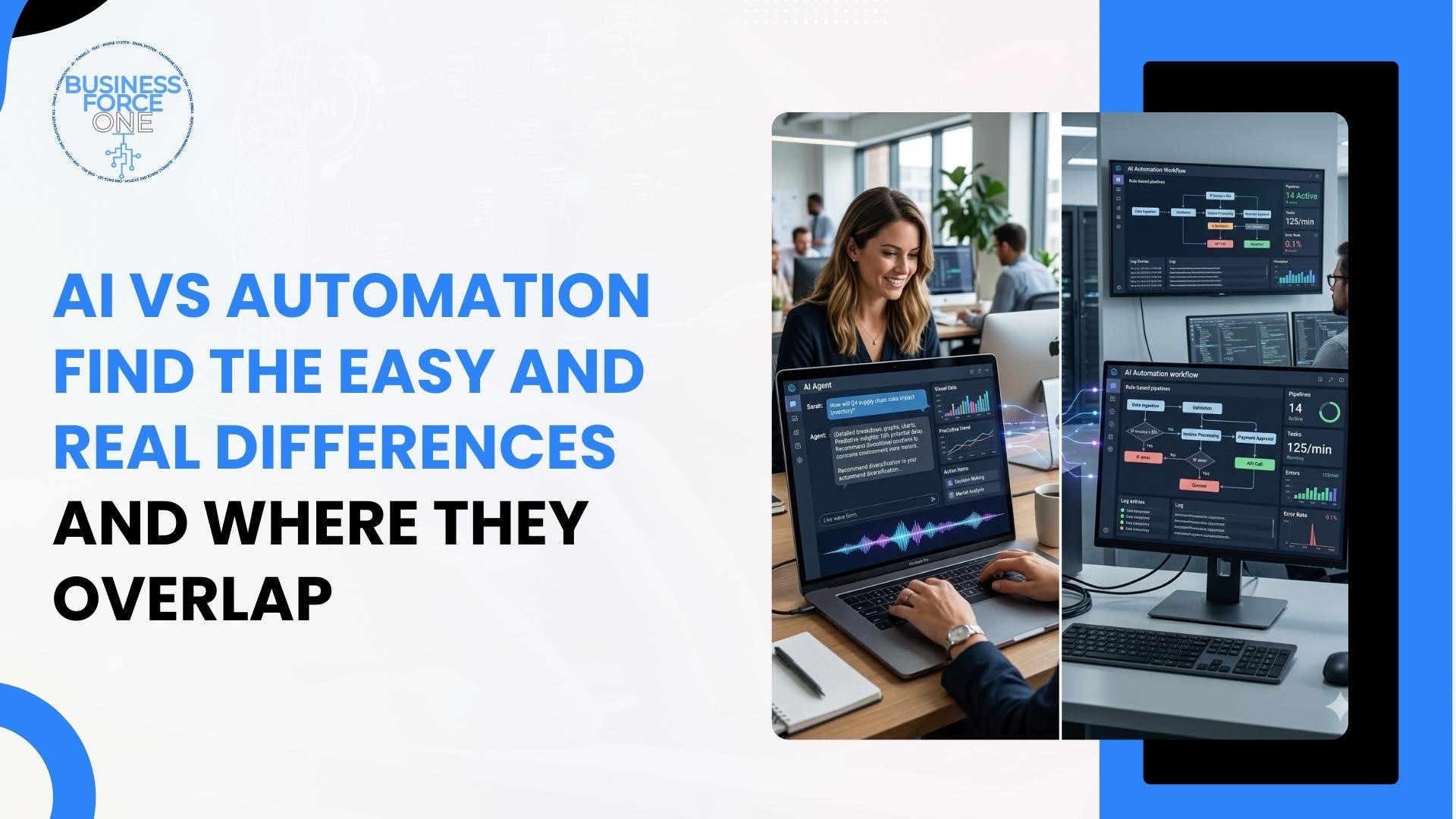
AI vs Automation: Find The Easy And Real Differences And Where They Overlap
Confusing AI vs automation is costing business owners thousands in lost leads and inefficient manual workflows. While traditional automation handles the "doing" through rigid scripts, Artificial Intelligence provides the "thinking" needed to adapt to real-time customer needs. To stop the revenue bleed, you need to understand how these two forces combine to create a scalable AI-powered growth engine. This all-in-one solution replaces slow, human-led processes with 24/7 digital employees at a fraction of the cost.
Whether you're trying to improve operations, scale customer service, or implement solutions to optimize marketing funnel performance, knowing how these technologies work together can give you a serious competitive advantage.
Let’s break it down in simple terms.
Defining the Contenders: What Are We Talking About?
Before diving into the AI vs automation comparison, it's crucial to have a clear definition of each.
What Is Automation? The Foundation of Efficiency
Automation is the process of using technology to perform repetitive tasks without human involvement. It follows predefined rules and workflows.
For example, sending automated emails after a form submission, scheduling social media posts, or processing invoices are all common use cases. These are examples of AI task automation at a basic level, even when AI isn’t deeply involved.
Key Characteristics of Automation
Rule-based and predictable
Works on predefined instructions
Does not learn or adapt
Ideal for repetitive, structured tasks
Traditional automation is fast and reliable. However, it lacks flexibility and cannot handle unexpected scenarios.
What Is Artificial Intelligence?
Artificial intelligence and automation often work together, but AI adds intelligence to the process.AI systems can learn from data, recognize patterns, and make decisions. Instead of following strict rules, AI adapts based on inputs and outcomes.
Examples include chatbots that understand questions, recommendation engines, and predictive analytics tools.
Where AI Becomes Powerful
AI allows businesses to move beyond simple automation. This is where intelligent automation comes in — combining automation with learning and decision-making.
The Differences and Similarities: A Deep Dive
Let's break down the key distinction, the difference between AI and automation, by looking at some specific comparisons of AI vs traditional automation testing approaches.Understanding AI vs automation is essential for making the right technology investment.
This comparison highlights that while artificial intelligence and automation both aim to improve efficiency, they do so in fundamentally different ways. Automation is about doing; AI is about thinking (or at least mimicking thought).
In simple terms, automation performs tasks, while AI thinks and improves while performing them.
Real-World Applications: Putting Theory into Practice
To truly grasp the implications of AI vs automation, let's explore how these technologies are applied in various business scenarios.
1. Industrial AI and Technology Comparisons for Robotics Automation
In manufacturing, the difference is stark.
Traditional Robotics Automation: A robot is programmed to pick up a specific part from point A and place it at point B. If the part is slightly askew or a different model arrives, the robot fails.
Industrial AI: A robot is equipped with computer vision and machine learning. It can identify different parts, even if they're randomly oriented, or detect anomalies in a product that standard sensors might miss. This adds a layer of intelligence and adaptability that significantly increases production line flexibility and quality control.
2. Comparing AI vs. Traditional Automation Testing Approaches
In software development, testing is a critical bottleneck.
Traditional Automation Testing: Relies on pre-written test scripts that follow specific user paths. If the software's user interface (UI) changes even slightly, the test scripts break and must be manually updated.
AI-Powered Automation Testing: These systems can analyze the UI of an application and automatically generate test scenarios, identifying dynamic elements and adapting to changes without manual intervention. This significantly reduces maintenance time and improves the overall quality and speed of software delivery.
3. The Rise of the AI Agent vs AI Automation
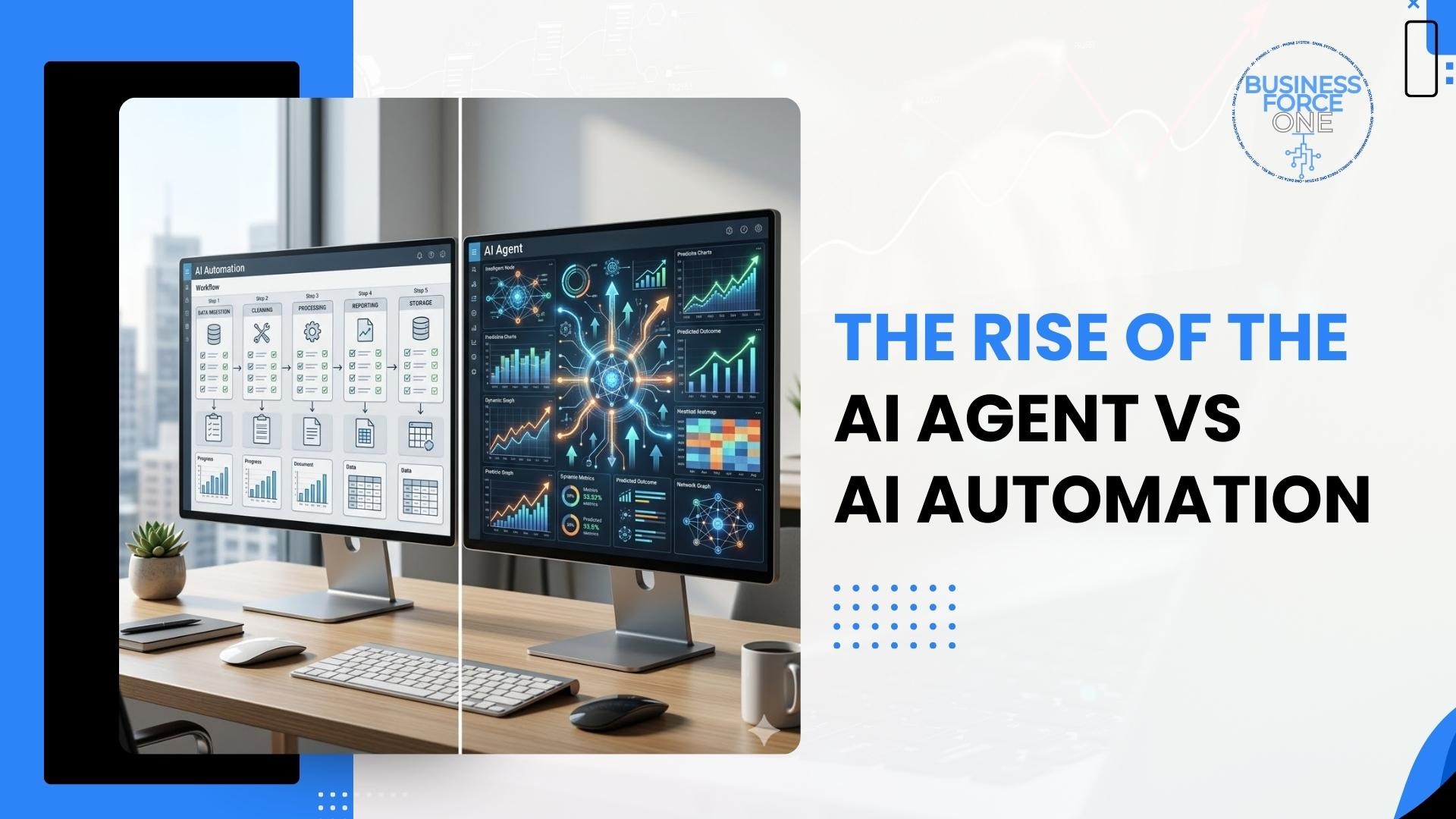
This is a subtle but important distinction in the world of conversational interfaces.
AI Automation (e.g., a chatbot based on decision trees): Follows a predefined script. It's an automation assistant that can answer a limited set of FAQs. If a customer's question is too complex or non-standard, it gets stuck or provides a generic response.
AI Agent: A more advanced system that can understand intent, manage context, and even perform complex actions (like processing a return or upgrading a plan) by integrating with other business systems. This is AI task automation at a much higher level, where the system is empowered to not just communicate but to solve problems on behalf of the customer.
4. Revolutionizing Marketing: Optimize Marketing Funnel Performance and Full Funnel Performance Marketing Solutions
Marketing is perhaps the biggest beneficiary of AI-powered automation.
Traditional Funnel Automation: Automated email sequences, lead scoring based on simple rules, and basic audience segmentation. It's about moving prospects through a predefined pipeline.
AI-Driven Solutions to Optimize Marketing Funnel Performance: This goes far beyond. AI can:
Predict which leads are most likely to convert, and precisely when is the best time to engage.
Personalize content and offers at scale, making the experience to each individual prospect’s behavior and preferences.
Optimize ad spend in real-time across different platforms to maximize ROI.
Analyze massive datasets to identify hidden patterns and insights that can inform your entire marketing and sales strategy.
These full funnel performance marketing solutions represent the future of business growth, leveraging the power of data and intelligence to drive efficiency and revenue.
Embracing the Future of Intelligent Automation
The debate isn’t truly about AI vs automation as competitors. It’s about understanding their distinct roles and potential. Traditional automation is the foundation—the workhorse that can handle the repetitive grunt work. AI is the brain that can add intelligence, adaptability, and insights, taking your automation to a whole new level.
For forward-thinking businesses, the path to success lies in embracing intelligent automation. This means:
Identifying high-volume, rule-based tasks for traditional automation.
Layering on AI-powered automation where decision-making, pattern recognition, and personalization are key.
Building a data-driven culture to fuel your AI models.
Investing in full funnel performance marketing solutions that can revolutionize your customer acquisition and retention strategies.
By understanding the unique contributions of both artificial intelligence and automation, you can build a more efficient, agile, and profitable business, ready to lead in the intelligent future.
Is Your Business Running on Autopilot or Just Old Scripts?
Don't let the "AI vs Automation" confusion stall your growth. Business Force One combines both into an all-in-one platform that reduces overhead by 60% while increasing conversions by 40%+.
Get Started with Business Force One – Deploy Your First AI Assistant Today
Frequently Asked Questions: AI vs Automation
What is AI vs Automation?
The core difference between AI vs automation lies in "thinking" versus "doing." Traditional automation follows a pre-set script to perform repetitive tasks (like sending a standard email). Artificial Intelligence (AI), however, uses data to learn, reason, and make decisions. While automation replaces manual labor, AI replaces manual decision-making, allowing you to deploy AI employees that adapt to customer behavior in real-time.
What is the simplest form of automation?
The simplest form of automation is a rule-based workflow, often described as "If This, Then That" (IFTTT). A common business example is an automated email auto-responder: if a lead fills out a form, then the system sends a "Thank You" email. It is a linear, predictable process that requires no "intelligence" to execute, only a trigger and an action.
Is AI a form of automation?
Yes, AI is considered an advanced form of automation, often referred to as intelligent automation. While traditional automation is rigid, AI-powered automation is dynamic. It automates complex cognitive tasks—such as voice recognition, sentiment analysis, and lead qualification—allowing a business to scale its operations without increasing its human headcount.
Are AI and automation the same?
No, they are not the same, though they work best together. Automation is the "body" that performs the work, while AI is the "brain" that guides it. Traditional automation can only do what it is told; AI can figure out the best way to do it. For a modern growth engine, you need both: automation to handle the volume and AI to provide the personalized, high-conversion experience that drives revenue.
