Why AI and Automation Is the Smartest Move for 2026
Artificial intelligence (AI) is no longer a futuristic concept. Today, businesses of all sizes are leveraging AI and automation to streamline processes, save time, and drive growth. Entrepreneurs and small business owners are realizing that automation can do much of the heavy lifting, allowing them to focus on strategy and customer engagement.
In this guide, we’ll break down what AI automation is, how it works, provide practical examples, and discuss ways to implement it in your business in 2026. By the end, you’ll have a clear roadmap for using AI to grow efficiently.
AI and Automation Made Simple
AI automation is the combination of artificial intelligence and automated workflows. It allows software to handle repetitive tasks, make decisions, and even learn from data—without constant human supervision.
Think of it as a digital employee. It can schedule meetings, follow up with leads, manage pipelines, and even generate content. By using AI for automation, businesses reduce errors, save money, and free employees to focus on more strategic work.
Some of the main benefits include:
Faster task completion
Improved accuracy and consistency
Cost savings on repetitive operations
Enhanced customer engagement
With AI handling routine tasks, your team can focus on building relationships, improving services, and creating strategies that drive growth.
How Businesses Actually Use AI and Automation
Implementing AI automation starts with software that combines machine learning, natural language processing, and workflow management. The steps usually include:
Spot repetitive tasks – Identify tasks that are time-consuming but predictable.
Choose the right platform – Pick a tool that integrates marketing, sales, and customer service.
Set up automated sequences – Create workflows that send messages, update CRMs, and trigger alerts automatically.
Monitor and refine – Track performance, tweak workflows, and remove bottlenecks.
The use of AI in automation isn’t limited to simple tasks. It can optimize marketing, sales, and customer service simultaneously, creating a seamless workflow for businesses.
Real-World Examples That Work
Businesses across industries are using AI in creative ways. Here are some AI automation examples you can relate to:
Customer Support: AI chatbots handle common questions instantly.
Sales Outreach: Automated SMS, email, and CRM sequences nurture leads.
Marketing Funnels: AI campaigns optimize engagement across channels.
Content Creation: AI generates blogs, product copy, and social media posts.
Workflow Management: AI triggers tasks, updates pipelines, and tracks performance automatically.
Platforms like Business Force One allow businesses to make AI workflow solutions that handle everything from lead capture to full-funnel marketing, helping entrepreneurs stay productive without manual effort.
Fresh Ideas to Try in 2026
If you’re just starting with AI and automation, consider these AI automation ideas:
Automate appointment scheduling and reminders.
Send follow-up messages to leads automatically.
Personalize email campaigns using AI insights.
Track customer behavior and optimize the marketing funnel.
Schedule and manage social media posts efficiently.
Request and respond to online reviews automatically.
These tasks can be automated using platforms that provide full funnel performance marketing solutions, giving businesses a unified system for marketing, sales, and engagement.
Marketing Made Smarter with AI
Marketing is one of the most effective areas for AI. By implementing solutions to optimize marketing funnel performance, businesses can:
Track which emails and messages drive conversions.
Automatically prioritize leads based on engagement.
Test and optimize campaign messages in real time.
Automate social media posting and ad targeting.
Use analytics dashboards to monitor ROI and results.
When marketers are using AI for automation, they save time, reduce mistakes, and focus on strategies that convert leads into loyal customers.
Step-by-Step Guide to Building Your AI Workflow
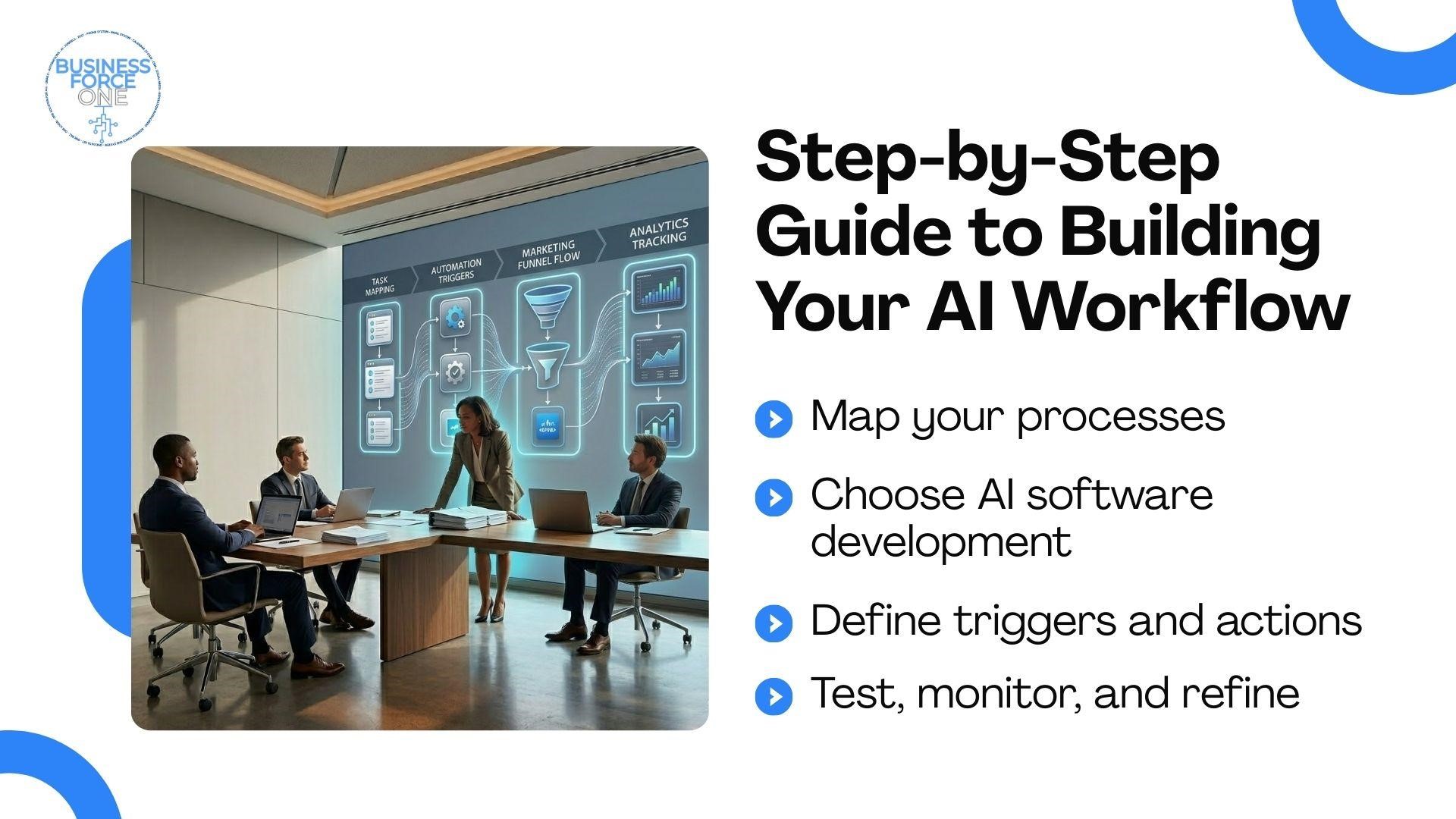
Building an AI workflow may sound complicated, but it’s straightforward when broken into steps:
Map your processes – List repetitive tasks and pain points.
Choose AI software development solutions for automating sales and marketing funnels – Look for tools that integrate multiple functions.
Define triggers and actions – Decide what should happen automatically and when.
Test, monitor, and refine – Track performance, remove bottlenecks, and improve results.
A well-designed workflow allows you to make AI workflow that captures leads, sends automated follow-ups, and updates your CRM without manual input.
Beyond Marketing—AI in Other Areas
AI is not limited to marketing and sales. Process automation with AI is transforming multiple industries:
Finance: Automating invoice approvals, expense tracking, and reporting.
Healthcare: Scheduling appointments, sending reminders, and managing patient records.
E-commerce: Inventory management, shipping notifications, and order tracking.
The versatility of AI shows that any business, regardless of industry, can benefit from automation in 2026.
Choosing the Right AI Automation Platform
Selecting the right AI platform can make or break your automation efforts. Look for solutions that offer:
Integration: Works with your CRM, email marketing, and social media tools.
Scalability: Supports business growth and complex workflows.
Ease of Use: Minimal setup and intuitive interface.
Full-Funnel Capabilities: Covers marketing, sales, and task automation.
Platforms like Business Force One combine AI-powered employees, funnel automation, messaging, and analytics in a single system. Entrepreneurs can manage their entire business in one place using AI for automation without juggling multiple tools.
The Benefits You Can’t Ignore
Adopting AI automation delivers clear, measurable advantages:
Efficiency: Complete tasks faster than human teams.
Consistency: Maintain high-quality results every time.
Scalability: Handle more clients and processes without extra staff.
Revenue Growth: Streamline marketing and sales to increase conversions.
Smarter Decisions: Use AI insights to guide strategy and improve performance.
Businesses that embrace AI gain a competitive edge and allow teams to focus on strategy, creativity, and growth.
Wrapping It Up
AI and automation is changing the way businesses operate in 2026. From AI for task automation to full funnel performance marketing solutions, these tools help businesses work smarter, faster, and more efficiently.
If you want to stay ahead of the competition, it’s time to explore AI-powered platforms that can manage workflows, optimize marketing funnels, and handle customer engagement—all in one place, just by using AI for automation.
Are you into transforming your business with AI? Get started with Business Force One today and experience the power of automation firsthand.
