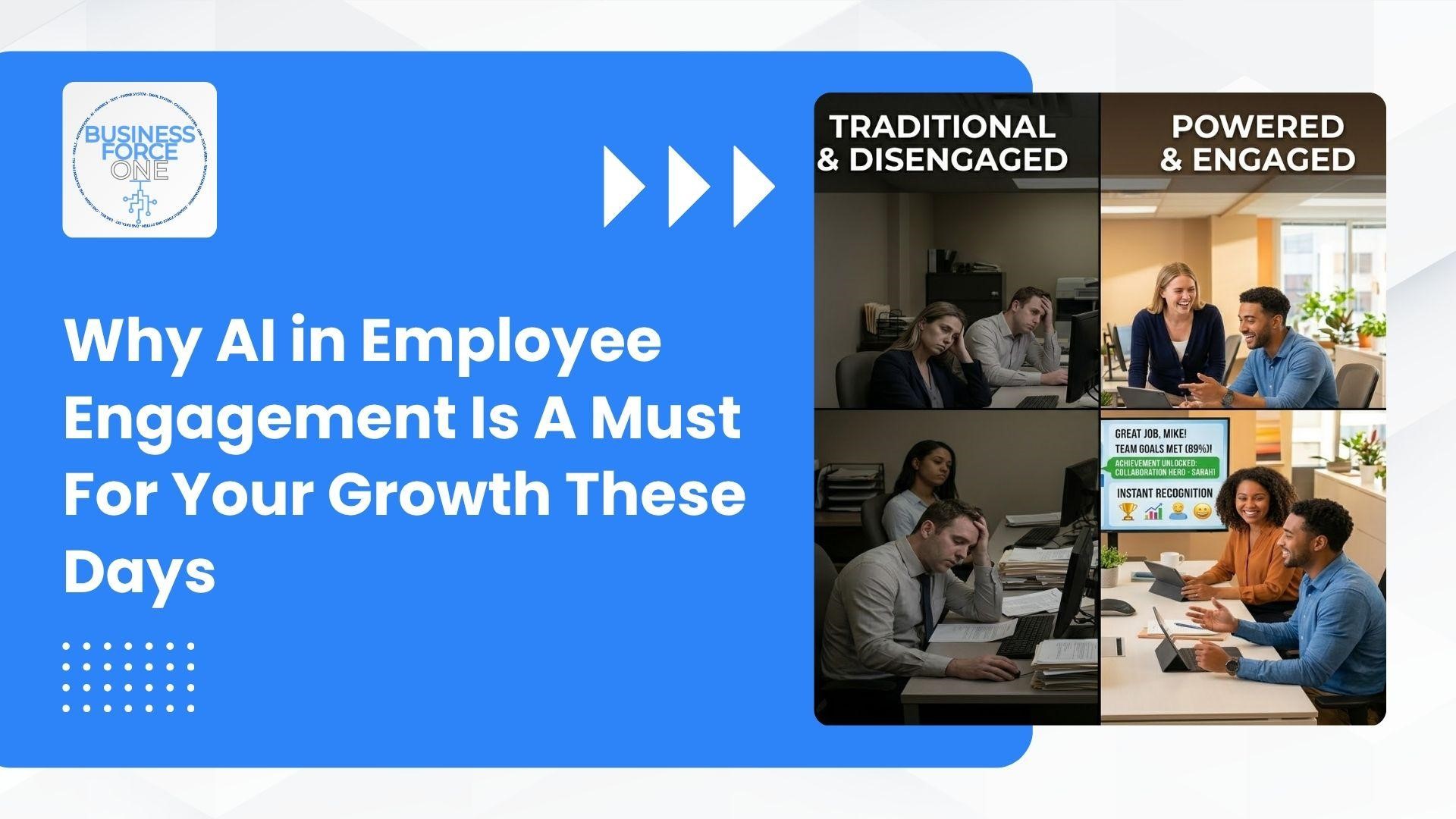
Why AI in Employee Engagement Is A Must For Your Growth These Days
In 2026, adopting AI-driven employee engagement has shifted from an optional advantage to a critical requirement for business expansion. As workforce morale remains at record lows worldwide, artificial intelligence allows companies to move beyond generic benefits and instead implement forward-thinking, tailored solutions that boost output, encourage long-term loyalty, and accelerate corporate success.
In early 2026, we are seeing a strange pattern in offices around the world. Most companies have spent a lot of money on new tech, but their workers are more tired than ever. This is called the "Readiness Paradox." Even though 95% of companies now have some form of artificial intelligence, 70% of leaders say their team is not actually ready to use it. This creates a lot of stress.
When you bring AI in employee engagement in your office the right way, you are not trying to replace people. You are trying to remove the "soul-crushing" parts of their day. Think about the last time you spent three hours just moving data from one sheet to another. That kind of work makes people want to quit. By using AI-powered employee engagement tools to handle that work, you let your team do the things they actually enjoy, like solving problems and talking to people.
Solving the readiness gap in your team
The biggest reason AI fails is that employees feel like the tech is being "done to them" rather than "for them." In 2026, only 49% of workers feel hopeful about AI. To fix this, you must show them that AI-powered employee support is a partner that helps them win. When an employee feels more competent because of a tool, they are six times more likely to stay at the company.
Key facts on AI and the 2026 workforce
To understand how to win this year, you need to look at the numbers. The world has changed fast, and what worked in 2024 does not work today.
How AI features that impact employee satisfaction work
Not all technology is the same. Some tools make life harder, but certain AI features that impact employee satisfaction really stand out. The most popular feature is "autonomy." This means the tool gives the worker more control over their time.
The power of the AI-powered writing assistant
An AI-powered writing assistant is a huge win for mental health. Instead of staring at a blank screen for an hour trying to write an email, an employee can type three notes and have the assistant build the draft. This doesn't just save time; it saves mental energy. Research shows that 71% of specialists say AI allows them to spend more time on the parts of their job they actually enjoy.
Improving trust with AI-powered employee support
Another big factor is AI-powered employee support. Instead of waiting three days for the HR department to answer a question about vacation time, an employee can get a direct answer in three seconds. This makes the worker feel like the company cares about their time. It builds trust, and trust is the biggest reason people stay at a company.
How to Use AI-powered marketing tools to prevent burnout
Your marketing team is often the first to feel burnt out. They have to come up with new ideas every single day, and that is hard. By using AI-powered marketing tools, you can take the "guessing" out of their job. These tools can look at millions of data points and tell the team what is working.
Turning data into creative freedom
When the team knows their work is actually helping the company, their engagement goes up. Nobody wants to work on a project that fails. When you use AI for employee retention, you are giving your marketing team a "cheat code" to be more successful. Success is the best cure for burnout because it gives the team a sense of purpose.
Comparing AI tools vs human-driven support for retention
A common question is whether you should choose AI tools vs human-driven support for retention. In 2026, the answer is that you need both working together. If you only use humans, your support is too slow. If you only use machines, your support feels cold and mean.
Moving from reactive to proactive care
The best way to keep your staff is to use AI-powered employee support to handle the easy stuff so your human managers have time to be real mentors. A human manager cannot be a good coach if they are stuck doing paperwork all day. When you automate the paperwork, the manager can finally sit down and listen to their team.
The impact of an AI-powered chatbot for customer service
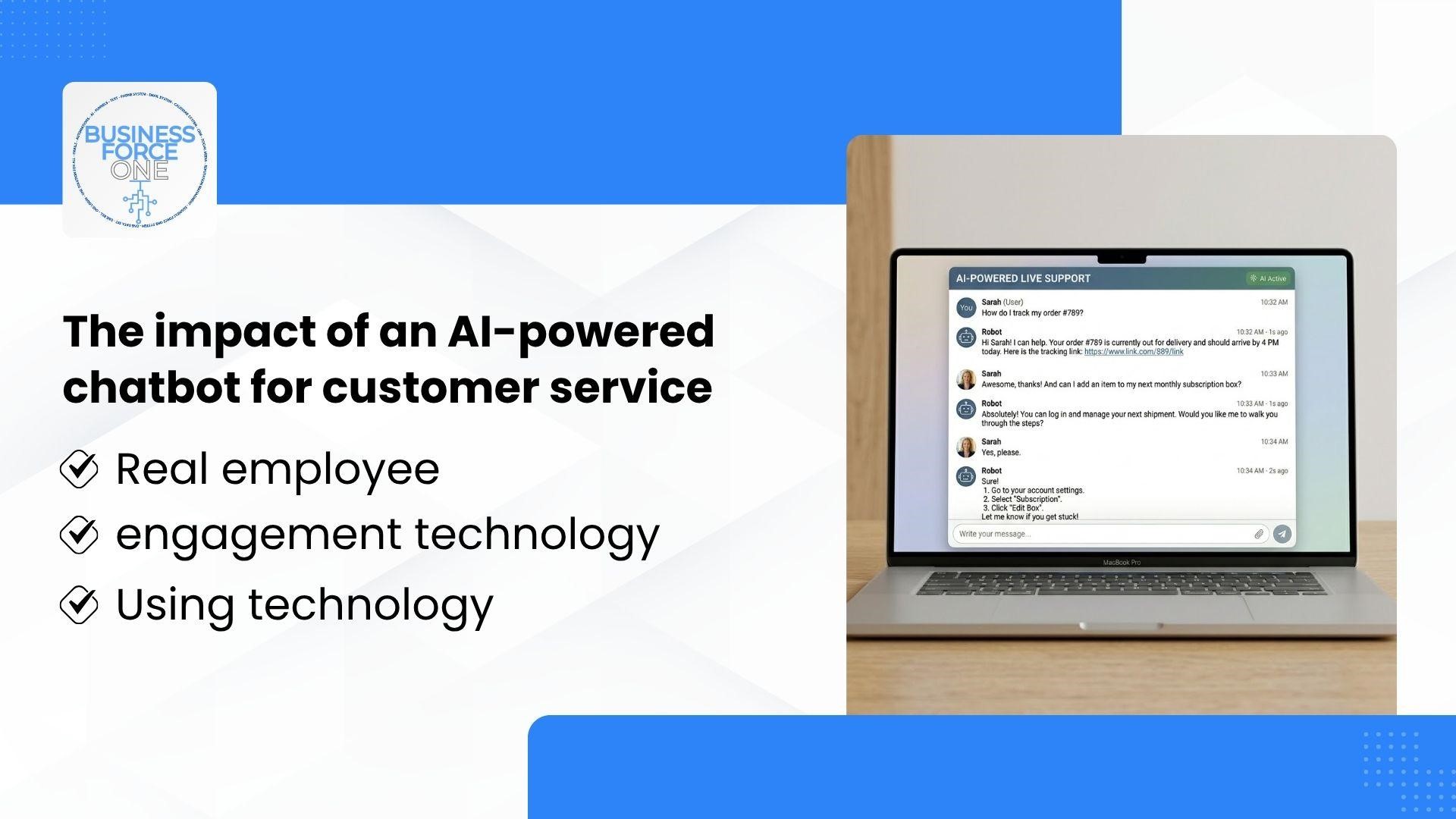
One of the biggest stressors for a team is dealing with angry customers. If your staff has to answer the same fifty angry questions every day, they will quit. This is why an AI-powered chatbot for customer service is actually a tool for employee happiness.
Protecting your team from repetitive stress
When the chatbot handles the easy questions like "Where is my order?" or "How do I reset my password?", it protects your team. Your employees only have to step in for the big, interesting problems. This makes their job feel more like a career and less like a chore.
Growing without the extra pressure
Plus, you can achieve AI-driven customer communication without additional staff, which saves you money that you can spend on employee bonuses or better office perks. This is a huge part of AI for employee retention. People don't leave because the work is hard; they leave because the work is never-ending. AI gives the work an endpoint.
Why employee engagement technology is the new standard
We used to think that "engagement" meant having a pizza party or a ping-pong table. In 2026, we know that isn't true. Real employee engagement technology is about the "flow" of work. If the work is smooth, people are happy. If the work is clunky and slow, people are mad.
Using technology and employee engagement to spot burnout
Using technology and employee engagement tools allows you to see problems before they happen. For instance, a smart system can see if an employee is working too many hours or if they haven't taken a break in weeks. It can send a gentle nudge to the manager to check on them. This is how you stop "quiet quitting" before it even starts.
Key takeaways for leading in 2026
If you want to keep your team happy and your business growing, you have to change how you look at your staff. They are your most important asset, and they are tired.
Be Direct: Use AI to give instant answers to your team.
Be Human: Use the time you save to have real conversations.
Be Smart: Don't buy a tool just because it's new. Buy it because it solves a pain point.
Be Safe: Stop the "Shadow AI" problem by giving your team safe, approved tools like Business Force One.
How Business Force One bridges the gap
At Business Force One, we have watched many companies fail because they forgot the "human" part of the business. They bought all the AI-powered marketing tools and the fancy chatbots, but they didn't train their people.
We believe that AI in employee engagement should be simple. It should be a tool that helps you breathe, not another thing you have to manage. By bringing all your communication, scheduling, and support into one place, we remove the friction that causes burnout.
Overview of AI in the Workplace
A final thought on using AI
In the end, AI in employee engagement is about making work feel less like "work." It is about getting back to the reasons we started our businesses in the first place: to create, to help, and to grow. By using Business Force One, you are choosing a path where technology serves your people, and your people serve your customers with a smile. The future isn't just about robots; it's about humans who are finally free to lead.
Wanted to see AI in action? Book your live demo now and start building a happier, more engaged team today
About the Authors:
This article was written and fact-checked by the Business Force One Team. We are a group of operations experts and human resource strategists dedicated to making work more human through technology. With over 15 years of combined experience in high-growth business scaling, we focus on the "Human-First" side of AI.
Frequently Asked Questions about AI in the Workplace
What is AI employee engagement?
AI employee engagement is the use of smart technology to listen to, understand, and support workers in real-time. Unlike old methods that only used once-a-year surveys, AI tools look at daily work patterns and feedback to spot burnout before it happens. In 2026, it is used to personalize the way a company talks to its staff, making every employee feel seen and valued as an individual rather than just a number.
How can companies improve workforce engagement with AI?
Companies can improve engagement by using AI to remove "friction" from the workday. By automating boring, repetitive tasks with AI-powered marketing tools or writing assistants, employees can focus on creative work they actually enjoy. AI also helps managers by flagging when a team member is overwhelmed, allowing for a "human" check-in at exactly the right moment. This builds a culture of support and trust.
How can AI personalize employee learning experiences?
AI personalizes learning by acting like a private tutor for every staff member. Instead of making everyone take the same boring training, an AI system looks at an employee's specific skills and gaps. It then creates a custom "learning path" that moves at their pace. For example, if a worker is great at sales but needs help with a new AI-powered chatbot for customer service, the system will only show them lessons on that specific tool.
How can I use AI to improve employee productivity?
To improve productivity, you should use AI to handle "low-value" tasks. This includes using an AI-powered writing assistant to draft emails or an AI scheduling assistant to book meetings. When you use these tools, you aren't asking people to work faster; you are giving them fewer chores to do. This allows your team to get more "deep work" done in less time, which leads to better results without causing extra stress.
