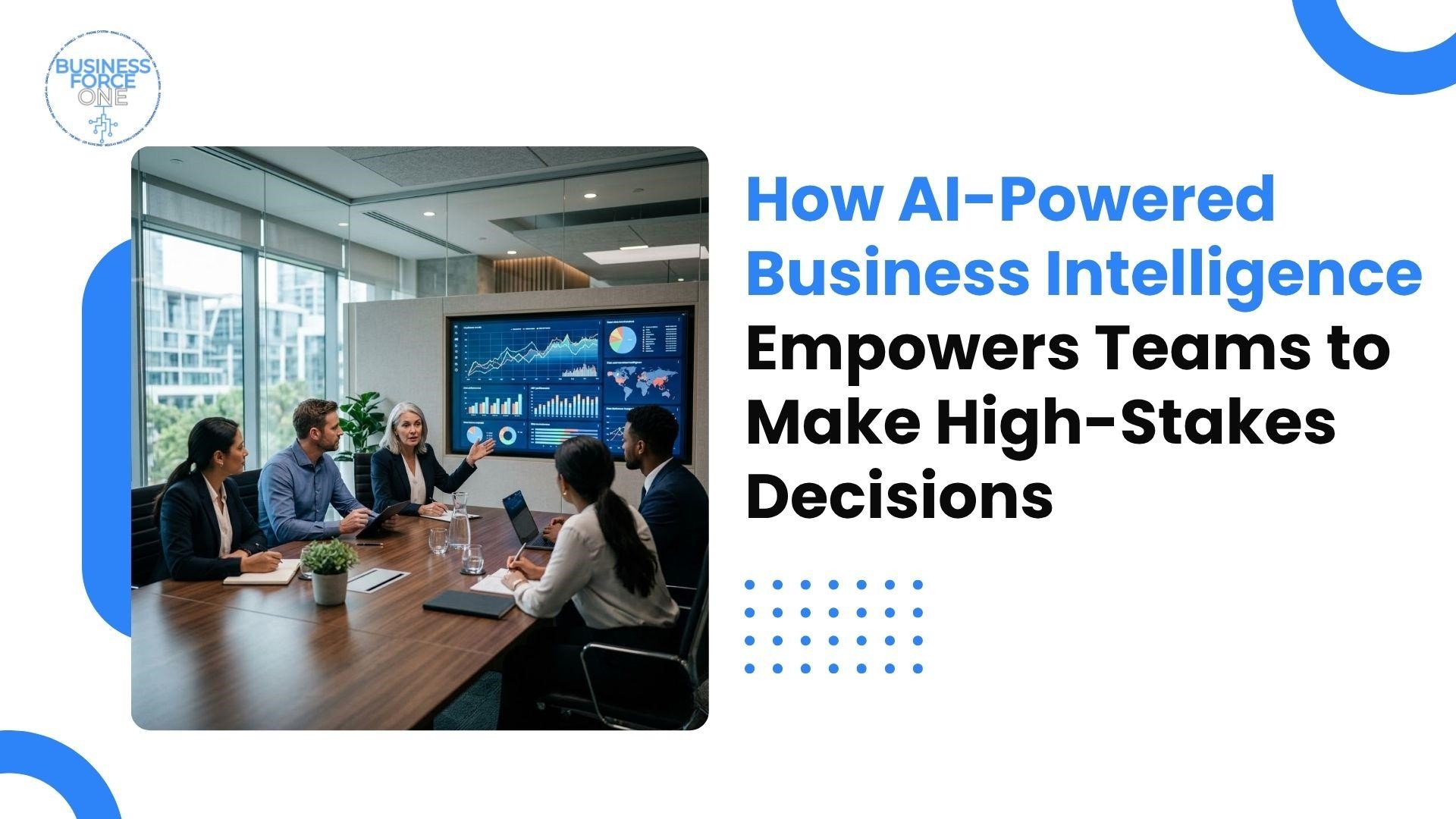
How AI-Powered Business Intelligence Empowers Teams to Make High-Stakes Decisions
AI-powered business intelligence (BI) is the integration of machine learning, natural language processing, and autonomous agents into the data analytics stack to move from descriptive analytics (what happened) to prescriptive action (what should we do).
In 2026, the "Answer First" strategy dictates that BI is no longer a collection of static charts; it is a conversational interface where an AI employee or AI-powered voice assistants provide instant, verified insights directly from a unified data stream.
Why Is Traditional BI Failing in 2026?
Legacy analytics platforms are suffering from "Data Latency." In a market defined by hyper-volatility, waiting 48 hours for a manual SQL report is an operational suicide mission.
The Interpretation Gap: Dashboards tell you that sales are down, but they don't tell you why or how to fix it.
Unstructured Data Blindness: 80-90% of enterprise data lives in "dark" silos, SMS threads, call transcripts, and support tickets.
The Talent Bottleneck: Scaling teams are held back by the limited bandwidth of data science teams to handle ad-hoc requests.
The shift toward AI-driven business intelligence solves this by using AI-powered tools to ingest both structured and unstructured data, providing a 360-degree view of the enterprise in real-time.
How Do AI-Powered Voice Assistants Change the Executive Suite?
The most significant leap in business intelligence using AI is the removal of the technical barrier between the CEO and the data. AI-powered voice assistants allow leadership to query their business using natural language.
Instead of navigating complex filters, an executive can simply ask: "What was our highest-margin product in the North region last week, and why did it outperform the West?" The system, acting as a high-level AI personal assistant, parses the CRM, marketing spend, and external market trends to deliver a spoken briefing. This is the cornerstone of modern AI and business strategy: immediate access to the truth without needing a data science degree.
Can AI-Powered Chatbots Democratize Data for Front-Line Teams?
Yes. While voice is for the boardroom, AI-powered chatbots are for the field. In 2026, every employee has an "Intelligence Officer" in their pocket.
By utilizing AI-driven business insights for enterprises, a sales rep can message an internal chatbot to get a prospect's sentiment analysis and "probability to close" score before walking into a meeting. This is automated business intelligence, it moves data from a "central vault" to a "distributed edge," empowering every staff member to make "top-of-license" decisions.
Comparison: Manual Workflow vs. AI Agentic Workflows
What Are AI Agentic Workflows in Analytics?
The future of AI in business analytics is the shift from "passive" to "agentic." Unlike a standard report, AI agentic workflows don't just find a problem, they begin the solution.
If the system detects a drop in conversion rates on a specific funnel, an agent doesn't just send an alert. It initiates a multi-step process:
It analyzes the heatmaps.
It checks the mobile load speeds.
It drafts a suggested optimization for the landing page.
It notifies the marketing lead via SMS with the evidence chain.
This is AI-driven business intelligence acting as a digital workforce, not just a software tool.
Pro-Tip: Pay Down Your "Metric Debt"
In 2026, the biggest barrier to AI success is inconsistent logic. Ensure your enterprise has a "Single Source of Truth" where terms like "Gross Margin" are defined once. Without a governed metric layer, your AI-powered tools will hallucinate inconsistent answers.
Technical Deep-Dive: Interoperability & Semantic SEO
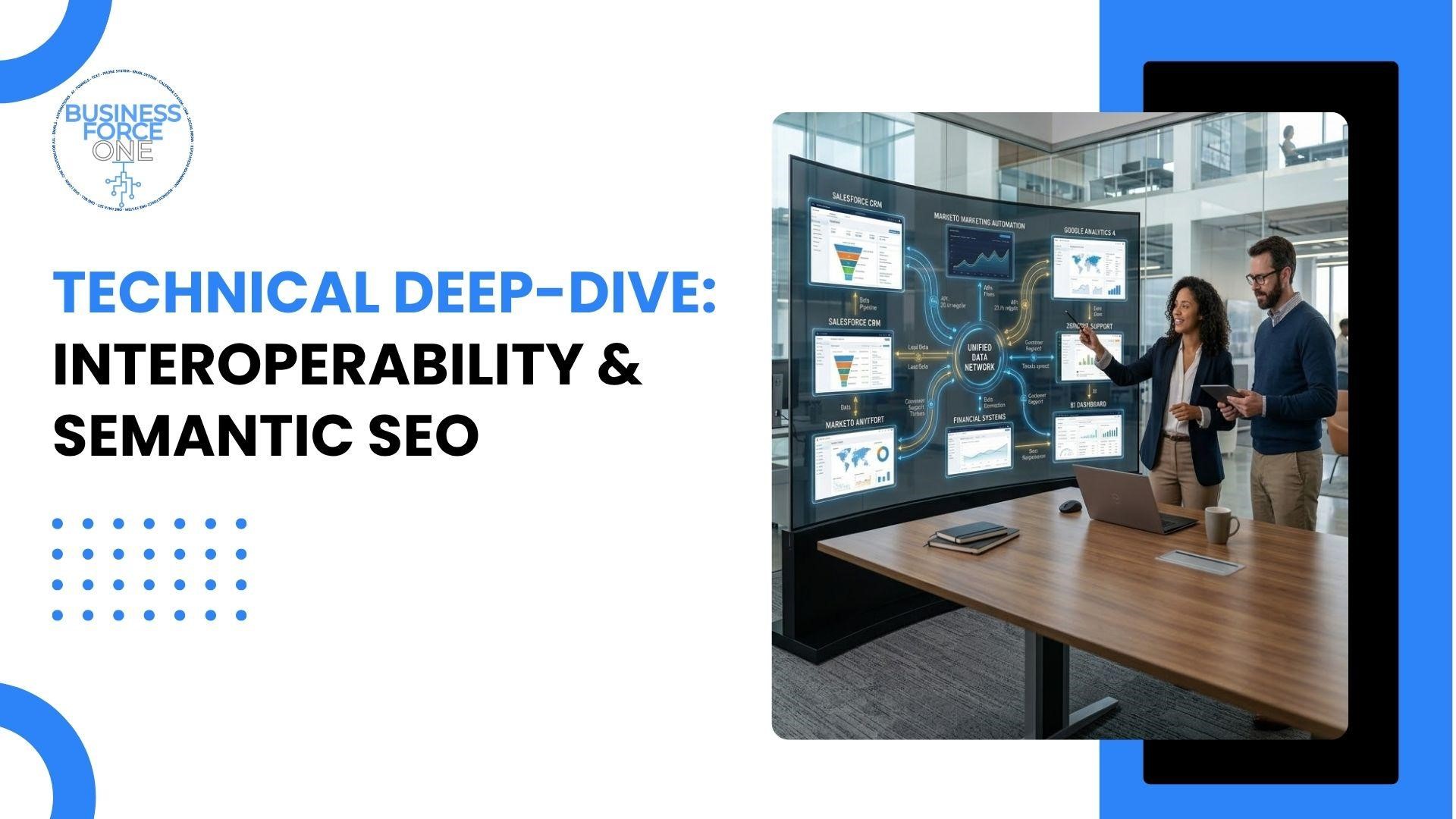
For AI-powered business intelligence to function, it must possess "Semantic Context." This means the AI doesn't just see a number; it understands the entity behind it (e.g., distinguishing between "Sales" as a department and "Sales" as a currency figure).
Systems Integration
A high-performance BI stack must talk to:
The Communication Stream: Ingesting GMB, Facebook Messenger, and SMS logs to track customer sentiment.
Financial Gateways: Linking marketing ROI directly to Stripe/PayPal data.
Compliance Frameworks: Operating within ISO 42001 and GDPR standards to ensure data privacy while utilizing AI and business intelligence.
The Skeptic's Corner: Is AI Data Reliable?
The major "myth" is that AI is a "black box" that cannot be trusted for financial reporting.
The Debunk: Modern AI-powered tools now utilize "Explainable AI" (XAI). When an agent provides an insight, it includes the Evidence Chain, the specific data sources and logic steps used. This allows for human-in-the-loop verification, ensuring that AI-driven business insights for enterprises remain audit-ready and factually reliable.
The Strategic Bottom Line
The era of the "Passive Dashboard" is over. In 2026, your business intelligence must be automated, conversational, and agentic. If your leadership team still has to "request a report" to know how the company is performing, you are losing ground to competitors who are already running on a unified, AI-driven operating system.
Strategic Audit:
Can you access your core KPIs via voice command?
Does your BI system read your unstructured SMS and support data?
Is your data team spending 80% of their time on "janitorial" work or "architectural" strategy?
Transitioning to Data Autonomy
The future of AI-powered business intelligence demands a shift from static dashboards to real-time, conversational data autonomy. By integrating AI-powered voice assistants and agentic workflows, enterprises eliminate the "latency tax," turning fragmented data into instant, actionable strategy. In 2026, scaling requires a unified system that doesn't just report the past, but actively architect’s your business’s future.
[Audit Your Data Strategy Today with Business Force One]
Frequently Asked Questions
What is the future of business intelligence?
The future lies in AI-powered business intelligence that shifts from static dashboards to autonomous, conversational insights. Using AI-powered voice assistants, leaders will query real-time data via natural language, eliminating manual reporting and enabling "zero-latency" strategic decision-making.
How does Business Force One integrate AI into business operations?
Business Force One replaces fragmented tools with a unified "AI Employee" infrastructure. By utilizing AI agentic workflows, the platform synchronizes CRM, SMS, and analytics into one stream, automating lead nurturing, reputation management, and complex cross-platform operational tasks.
How do machine learning and AI help businesses?
AI and machine learning drive operational efficiency by identifying patterns in massive datasets. These AI-powered tools predict customer churn, optimize pricing, and automate repetitive administrative burdens, allowing human teams to focus on high-value, "top-of-license" strategic work.
How are businesses using AI for sales and marketing?
Enterprises deploy AI-powered chatbots and automated nurture sequences to engage leads instantly across SMS, GMB, and social media. This AI-driven business intelligence scores lead intent and automates follow-ups, ensuring no opportunity is lost to manual delay
