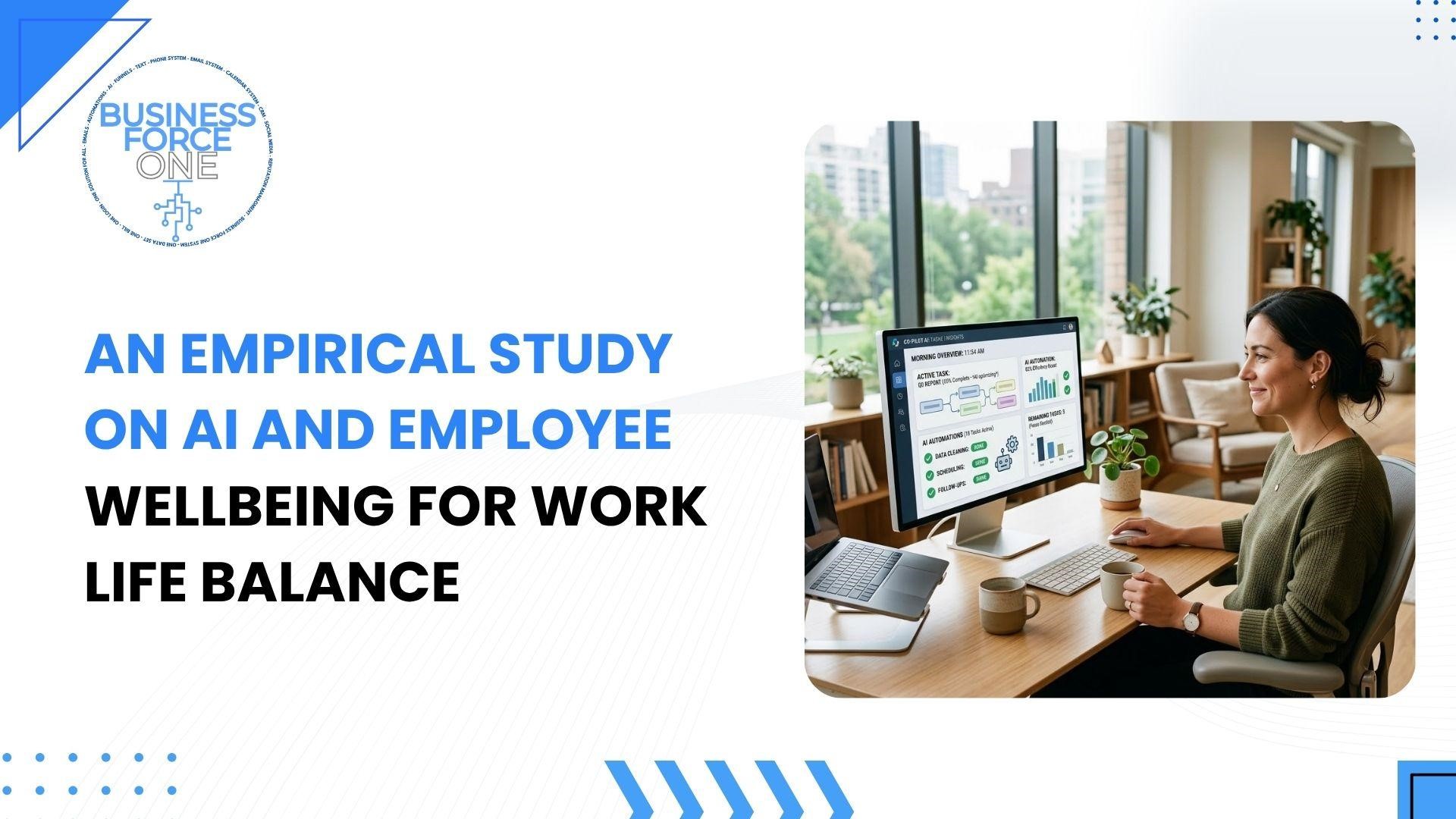
An Empirical Study on AI and Employee Wellbeing For Work Life Balance
The 2026 workplace is currently defined by a "Redline Paradox": while AI-powered up automation has increased productivity by 40%, global employee engagement has dropped to a five-year low of 20% (Gallup, 2026). This is largely due to "Technostress", the cognitive drain of managing high-velocity digital agents without sufficient recovery time.
It is April 2026, and the "Great Automation Hope" has hit a psychological wall. While AI-powered up automation has increased output by 40%, it has introduced a toxic byproduct: Technostress. Mid-level managers report that while digital agents check off their to-do lists, their mental load has tripled as they "orchestrate" a workforce that never sleeps. This friction triggered a massive cultural pivot, most notably seen in the Cadbury 2026 "Say It With Silk" campaign. After years of pushing AI, Cadbury’s new stance, "AI knows nothing about love" highlights a global "AI Fatigue." It is a stark reminder that while AI automation services can generate data, they cannot navigate the messy, vulnerable nuances of human morale or the psychological safety required for true innovation.
To survive this shift, firms must move from "Quantity of Output" to a high-trust model of AI-human collaboration in the workplace. New empirical research from Q1 2026 confirms that AI in workplace strategies only succeed when they are transparent and "explainable," especially following the August 2026 EU AI Act mandate for human oversight. The goal is to reclaim "Cognitive White Space" by offloading high-volume logistics, such as AI business process automation or the benefits of AI for employee handbook management to a unified system. This is where Business Force One steps in. By consolidating fragmented AI in marketing automation into one autonomous environment, we don't just increase your speed; we decrease your team’s heart rate, allowing your people to focus on the high-level strategy that machines "know nothing" about.
The 2026 Data on AI and Employee Burnout
New AI in the workplace research conducted by global HR institutes has identified a phenomenon called "Silent Decision-Making Fatigue." When employees use AI automation services to handle 90% of their routine tasks, the remaining 10% of their work consists entirely of high-stakes, high-pressure decisions.
The human brain is not designed to operate in a "high-stakes-only" environment for eight hours a day. We need the "mundane" tasks to allow for cognitive recovery. Without them, we face a 45% surge in burnout risk, particularly in sectors heavily reliant on AI business process automation.
Advantages and Disadvantages of AI in the Workplace
To navigate this transition, leaders must understand the specific tradeoffs currently being observed in high-growth firms.
Moving Beyond the "Roboboss" with Psychological Safety
The primary problems with AI in the workplace stem from a lack of agency. In August 2026, the EU AI Act introduced a landmark "Right to Human Oversight" rule. This regulation prevents companies from using AI for "Unacceptable Risks," such as secret emotion recognition or automated firing without human review.
This legal shift mirrors a psychological one. The most successful 2026 workspaces are those that have moved from "Replacement" to AI-human collaboration in the workplace. Employees need to know that their digital colleagues are there to support their expertise, not to surveil their productivity.
Benefits of AI for Employee Handbook Management
One of the most effective ways to use AI for well-being is by offloading "Friction Tasks." For example, the benefits of AI for employee handbook management are immense. Instead of an employee spending forty minutes searching a PDF for a parental leave policy or a mental health benefit, they can ask a specialized agent and get an instant, empathetic answer.
This is a "Low-Stakes, High-Value" use of AI that provides immediate relief to the employee and the HR department alike. It uses AI business process automation to solve a human frustration, rather than to monitor human behavior.
Implementing a "Recovery-First" Workflow
To achieve a healthy symbiosis, businesses must move away from fragmented tools. When your ai automation services are siloed, your employees become the "human glue" that holds the tech stack together. This manual data-bridging is the hidden killer of focus.
This is the central mission of Business Force One. We don't just add "more AI" to your ecosystem; we consolidate your fragmented AI business process automation and AI in marketing automation into a single, autonomous environment.
Our AI employee models are designed with "Explainable Execution." They don't just act; they provide a transparent log of their actions, restoring the employee’s sense of control. By letting our agents handle the multi-step logistics, we give your human team the "Cognitive White Space" they need to remain creative, strategic, and ………..most importantly…….sane.
Future Outlook for the Human Centric Workspace
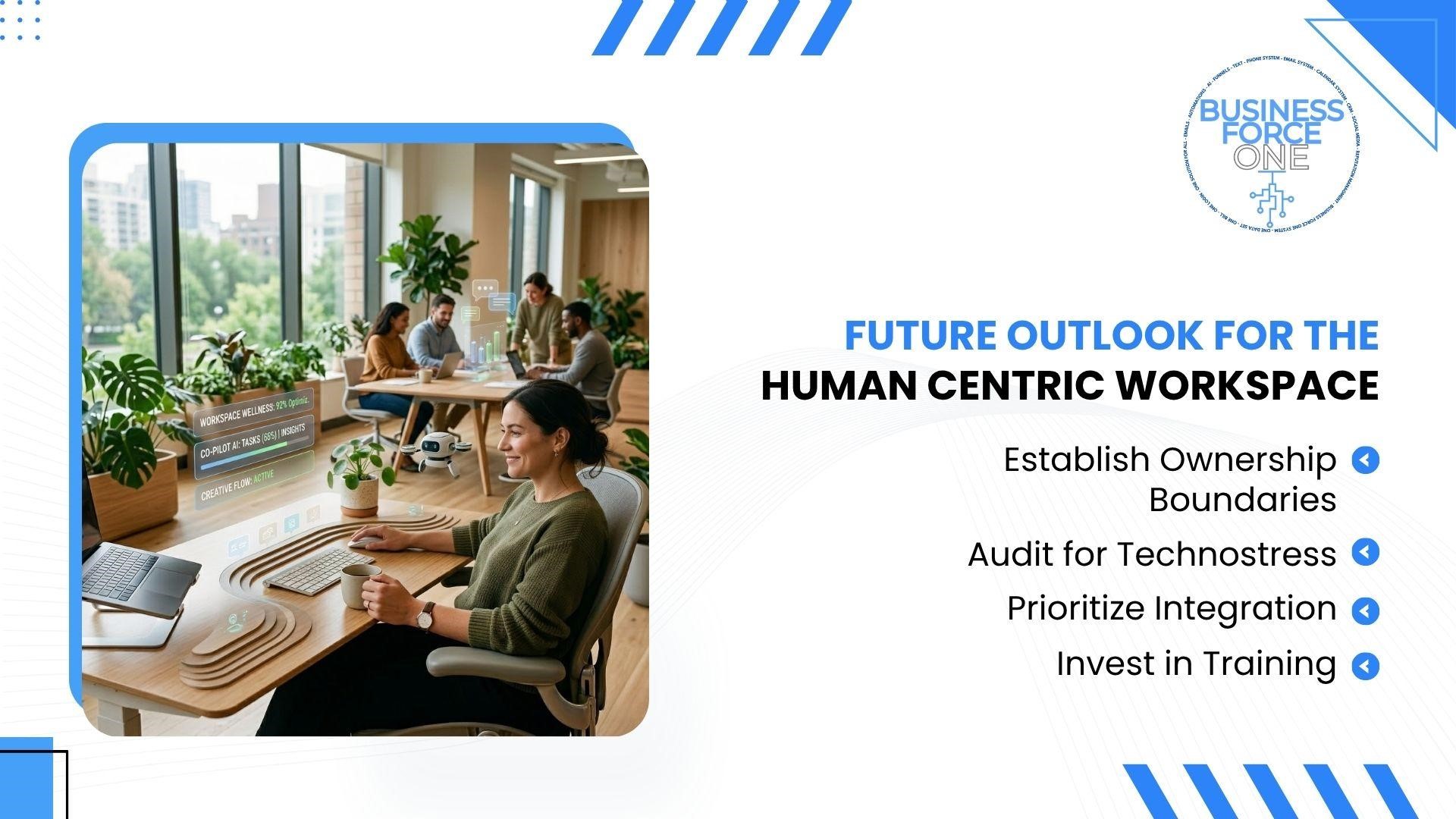
In the next 12 to 18 months, the market will stop rewarding "Raw Speed" and start rewarding "Operational Resilience." Gartner and McKinsey both predict that by 2027, the "Premium" companies will be those that can prove a high level of AI-human collaboration in the workplace without high turnover rates.
The workplace of 2026 is no longer a physical location; it is a collaborative field between human intuition and machine precision. If your AI strategy makes your humans feel like robots, you haven't innovated; you've just automated your decline. The future belongs to those who use the best voice assistant and agentic tech to give people their time back, not to take their agency away.
Strategy for Long-Term Resilience
Establish Ownership Boundaries: Clearly define what tasks are "Machine-Owned" and what are "Human-Led."
Audit for Technostress: Regularly measure "Digital Fatigue" scores across your departments.
Prioritize Integration: Stop the "App Hopping" by using a unified operating system like Business Force One.
Invest in Training: Move from "Using AI" to "Orchestrating Agents."
The Evolution of the Human-Centric Architect
As we move through 2026, the definition of a "high-performance" organization has fundamentally shifted. It is no longer about which firm can deploy the most ai automation services or generate the highest volume of synthetic content; it is about which leaders can best engineer the AI-human collaboration in the workplace. In a world where Cadbury reminds us that algorithms lack the capacity for genuine connection, your competitive edge lies in your team’s ability to be authentically, messily, and strategically human.
Claim Your Cognitive Sovereignty: Experience the Business Force One "Zero-Friction" Environment and Watch Your Team Breathe Again.
Frequently Asked Questions About AI in Workspace
How can AI be used in the workplace?
AI empowers workplaces by handling high-volume data analysis and personalized employee support. However, concerning 2026 data shows that heavy reliance can spike burnout. Leaders must balance speed with human-centric oversight to ensure technology enhances, rather than exhausts, the workforce.
How to use AI to automate tasks?
Start by identifying repetitive, rule-based duties like scheduling or email drafting. Use agentic tools to execute these workflows quietly in the background. Warning: Avoid automating tasks requiring deep emotional nuance, as machines still struggle with complex human-level situational judgment.
What is AI workflow automation?
This is the intelligent orchestration of multi-step business processes without constant human intervention. In 2026, systems learn patterns to predict bottlenecks and adjust resources. While it slashes administrative costs, it requires transparent "decision logs" to maintain essential team trust.
